Η βρετανική και η γαλλική στάση απέναντι στην Ελλάδα κατά την Σύνοδο Ειρήνης των Παρισίων, 1919, στον δρόμο πριν και μετά τις Σέβρες, μέσα από δύο σαφή κείμενα του 1920.
Χαρίτος Αναστασίου – 27/08/2023 – Ελληνική και Παγκόσμια Στρατ. Ιστορία
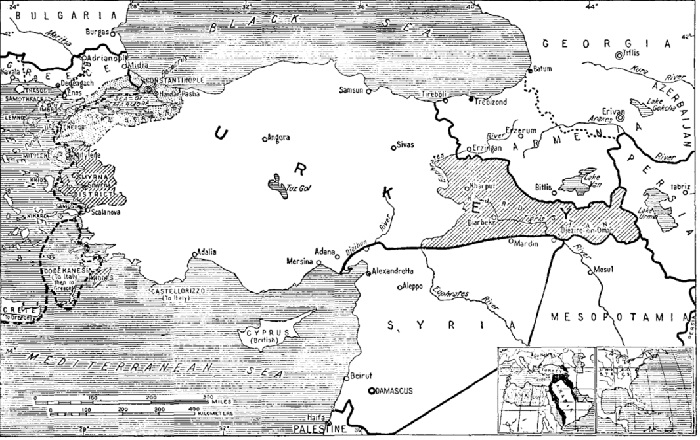
Είναι αφελές να νομίζουμε ότι οι Γάλλοι απέσυραν την υποστήριξη τους στην Ελλάδα και στις Σέβρες λόγω της επιστροφής του Κωνσταντίνου Α’. Ήταν η βολική αφορμή, όχι η αιτία. Οι Γάλλοι έβλεπαν από την πρώτη στιγμή εχθρικά την Μεγάλη Ελλάδα, σαν όργανο της περαιτέρω βρετανικής διείσδυσης στην Μέση Ανατολή, διείσδυση που έρχονταν ενάντια στα συμφέροντα τους στην περιοχή.
Τόσο οι Γάλλοι, όσο και πολύ πιο έντονα οι Ιταλοί έβλεπαν την Ελλάδα σαν ένα προτεκτοράτο της ανταγωνιστικής τους Βρετανίας, σαν ένα αγγλικό φράγμα στην προς ανατολάς επέκταση τους. Επίσης μία συμπαγής κεμαλική και φιλοδυτική Τουρκία θα συνιστούσε κι ένα ισχυρό φράγμα στην επέκταση των Μπολσεβίκων για την Γαλλία που την περίοδο εκείνη είχε καταστήσει βασική εξωτερική της πολιτική την δημιουργία ενός Cordon sanitaire στην σοβιετική επέκταση, υποστηρίζοντας δυναμικά για αυτόν τον σκοπό την Πολωνία, την Τσεχοσλοβακία, καθώς και τις Βαλτικές και την Ρουμανία.
Πολιτική που έπειτα υιοθέτησαν και οι άλλες Μεγάλες Δυνάμεις- και μετά την Λωζάννη και η Ελλάδα.
Διαβάστε:
“The idea which prompted our support of Greece was no emotional impulse but the natural expression of our historical policy —the protection of India and the Suez Canal. For a century we had supported Turkey as the first line of defence in the Eastern Mediterranean. Turkey had proven a broken reed and we fell back on the second line, the line from Salamis to Smyrna. Geographically the position of Greece was unique for our purpose: politically she was strong enough to save us expense in peace, and weak enough to be completely subservient in war”.
“They (the French) have always been jealous of the prestige which we have acquired in Greece; they are jealous of our naval supremacy, our naval mission, of our important commercial interests. They are above all afraid of the preponderance which a British ‘protectorate’ over an enlarged Greece would give us in the Eastern Mediterranean. Sentimentally they hanker after the prestige which France enjoyed in the East under Louis XIV; commercially their financiers hope to secure the position at Constantinople vacated by the Bhagdad railway and the Deutsche Bank; politically and practically they wish to curtail their responsibilities in Cilicia and Syria. In the first place therefore, they desire to destroy the Greater Greece created by the Treaty of Sevres and incidentally, to undermine our great influence in that country. In the second place, with anxious eyes upon Kemal and Bolsheviks, they wish to come to some bargain with Angora, such as will give them peace in Syria and a predominant position in Turkey.”
Documents on British Foreign Policy, 1st series, vol. XII, no. 488, Memorandum by Mr. Nicolson on future policy towards King Constantine, 20 December 1920.
Κι ένα εξαιρετικό κείμενο που περιγράφει σύντομα και άψογα την ιδιαίτερη φύση της βρετανικής εξωτερικής πολιτικής στην Εγγύς Ανατολή, που μέχρι και το 1914 (καθώς και μετά το 1923) είχε σαν κύριο στόχο την αποφυγή της ρωσικής καθόδου στην Μεσόγειο με παράλληλη υποστήριξη τόσο της Ελλάδας, όσο και της Τουρκίας, στάση που το ΗΒ διατηρεί μέχρι σήμερα:
“It remains then to consider whether the Great Powers can solve the Eastern Question … Foreigners find it extremely difficult to understand the foreign, and especially the Eastern policy of Great Britain, and we cannot wonder at their difficulty, for it seems a mass of contradictions to Englishmen themselves … At one moment we are bringing about the independence of Greece by sending the Turkish fleet to the bottom of the bay of Navarino. Twenty-seven years later we are spending immense sums and wasting thousands of lives in order to protect the Turks against Russia.”
Travel and Politics in the Near East, 1898. William Miller (1864–1945).